
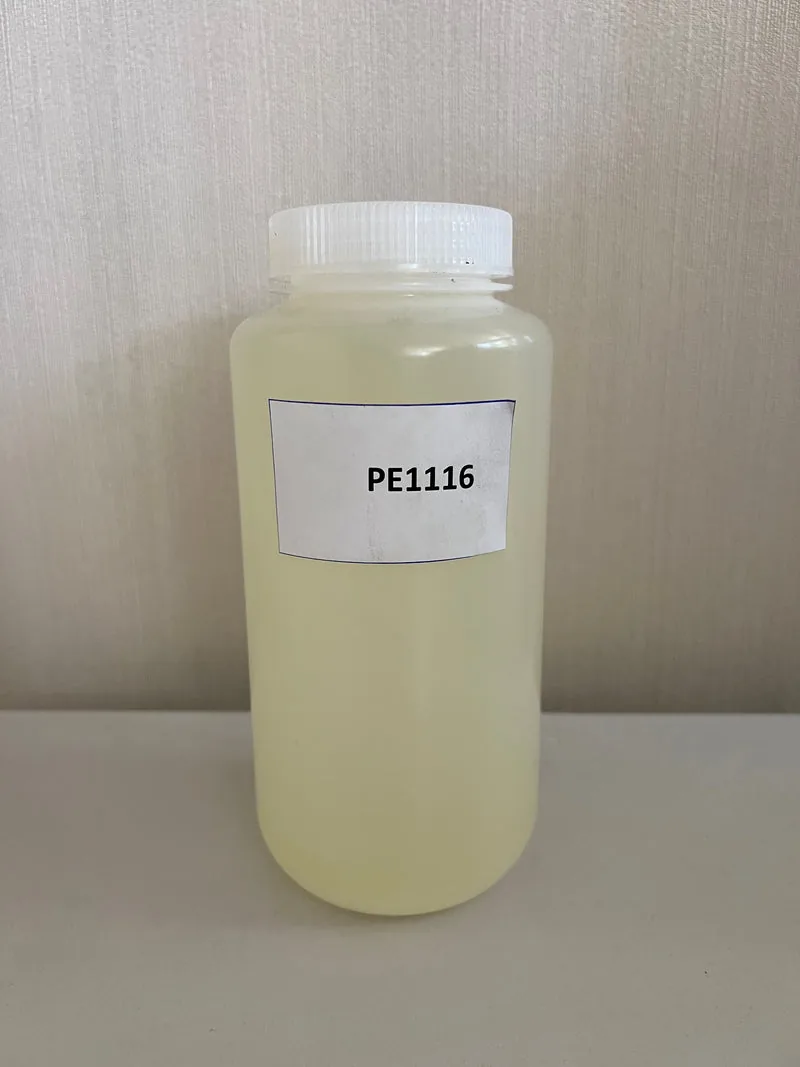
High-Temperature Oil −40°C to +150°C — PE1116
PE1116 synthetic high-temperature impregnation oil for sintered self-lubricating bushings, rated −40°C to +150°C. 1-litre pack for top-up and re-impregnation.
- Material
- PE1116
- Family
- Industrial Oils
- References
- 1 available sizes
- Supply
- Standard sizes and project quantities
Choose your size
1 original dimensional references are available for this product group.
Selected reference: Default Title
Request this size →PE1116 is a high-temperature impregnation oil formulated for oil-impregnated sintered self-lubricating bearings operating across an unusually wide window of −40°C to +150°C. It is the working fluid that gives a porous sintered bush its maintenance-free character: held within the interconnected pore network of the bearing wall, it is released as a hydrodynamic film during running and drawn back when motion stops. This SKU is the consumable oil itself, not a bearing, supplied so that engineers and maintenance teams can impregnate blanks, top up bushes that have lost charge, or re-impregnate components returned from service.
Where standard mineral impregnation oils lose their load-carrying film as viscosity collapses much above +100°C, and stiffen or wax below freezing, PE1116 is intended to keep a usable lubricating film across the full −40°C to +150°C span. That makes it the correct fluid for sintered bushings mounted close to heat sources, in hot process zones, or in equipment that must start reliably from deep-cold ambient. It is compatible with the sintered families Bushingo supplies, including BP25 sintered bronze, FP20 sintered iron and SO16 alloy bushes.
PE1116 is offered in a single 1-litre pack size. One litre is a practical laboratory and workshop quantity: enough to vacuum-impregnate a substantial batch of small and medium bushes, or to keep a re-impregnation bath topped up, while remaining easy to store, decant and handle. Because it is dispensed as pure impregnation oil, it should be used undiluted and kept clean, so that only the specified fluid enters the pore structure of the bearing.
How it works
An oil-impregnated sintered bush is a porous metal skeleton, typically with around 20–25% interconnected porosity, whose voids are saturated with lubricating oil. PE1116 is the fluid that fills those voids. When the shaft turns, frictional heat and the wedging action of rotation draw oil out of the surface pores by capillary action, building a thin hydrodynamic film that separates shaft and bore. Because oil has a higher coefficient of thermal expansion than the metal matrix, warming during operation pushes additional oil toward the running surface; as the assembly cools and stops, capillary forces and the contracting oil pull the film back into the pore network, so the charge is recycled rather than thrown off. This closed exchange is what lets a correctly impregnated bush run maintenance-free and dry to the touch.
What distinguishes a high-temperature impregnation oil such as PE1116 is its behaviour at the extremes of that thermal cycle. High-temperature impregnation fluids of this class are formulated to hold viscosity and oxidation stability as temperature climbs toward the upper limit, resisting the thinning and dry-out that cause a standard oil to lose its film and the bush to run metal-to-metal. At the cold end, a low pour point keeps the fluid mobile so capillary release still occurs on a sub-zero start, rather than the oil waxing in the pores. The result is a lubricating film that remains present and load-bearing across the whole −40°C to +150°C operating range typical for this material class.
Technical characteristics
| Product type | High-temperature impregnation oil (consumable working fluid, not a bearing) |
|---|---|
| Designation | PE1116 |
| Family | Impregnation Oils |
| Operating temperature range | −40°C to +150°C (as specified for this oil) |
| Base fluid class | Synthetic-type high-temperature formulation, characteristic of PAO/ester impregnation oils used to extend range and oxidation stability |
| Function | Initial impregnation of sintered blanks, in-service top-up, and re-impregnation of returned bushes |
| Compatible bearing materials | Sintered bronze (BP25), sintered iron (FP20) and SO16 alloy self-lubricating bushes |
| Target pore fill | Saturates the ~20–25% interconnected porosity typical of ISO 2795 / DIN 1850 sintered bushes |
| Viscosity index | High VI typical of wide-range synthetic impregnation fluids (retains film across the temperature span) |
| Pack size | 1 litre (single variant) |
Typical applications
- Re-impregnation of sintered bushings recovered from high-temperature service
- Impregnation of BP25, FP20 and SO16 blanks intended for hot-zone duty
- Bushings in electric-motor end shields running close to hot windings
- Oven, dryer and furnace conveyor bushes in hot process areas
- Automotive under-bonnet actuators, flaps and pivots exposed to engine heat
- HVAC and blower-motor bushings mounted near heat exchangers
- Kitchen and small-appliance mechanisms subject to elevated temperatures
- Textile and packaging machinery bushings with hot running conditions
- Cold-start equipment that must lubricate reliably from sub-zero ambient
- Pump and gearmotor bushings requiring a wide-temperature impregnation charge
Installation & fitting
PE1116 is applied by impregnating the porous bush rather than by fitting a part. For a full charge, the most effective method is vacuum impregnation:
- Clean and dry the sintered component first, removing any degraded oil, swarf or solvent residue so only PE1116 occupies the pore network.
- Submerge the bushes in the oil and draw a vacuum to evacuate air from the interconnected porosity; releasing the vacuum then forces oil deep into the pores. Warming the bath to roughly 80–100°C lowers viscosity and speeds penetration.
- Where vacuum equipment is unavailable, a hot soak in PE1116 achieves partial impregnation and is suitable for top-up of bushes that have lost part of their charge in service.
- Allow excess oil to drain and wipe the running surfaces; a correctly impregnated bush feels only slightly oily, with the charge held internally.
Handle as an industrial lubricant: use undiluted, keep containers closed and free of contamination, avoid mixing with other oil grades, and store the sealed 1-litre pack cool and away from direct heat. Press-fitting of the impregnated bush into its housing follows normal sintered-bearing practice and should be done after impregnation, taking care not to over-compress the bore and close the surface porosity.
Selection guidance
Choose PE1116 when the sintered bush must run outside the comfortable band of a standard mineral impregnation oil. A conventional mineral charge is economical for general-purpose duty but tends to lose its hydrodynamic film as temperatures climb much above +100°C and can stiffen at sub-zero starts. PE1116, with its specified −40°C to +150°C range and synthetic-class formulation, is the right selection for hot-mounted, hot-process or wide-temperature applications, and for re-impregnating bushes that dried out because their original mineral oil was thermally overtaxed. If the equipment operates only at moderate ambient and never approaches these extremes, a standard-grade impregnation oil may be more cost-effective; specify PE1116 where the temperature span, oxidation stability and reliable cold-start release genuinely justify a high-temperature synthetic fluid.
Available references
1 original dimensional references are available for this product group.
Frequently asked questions
Is PE1116 a bearing or an oil?
Which bushings can I impregnate with PE1116?
What does the −40°C to +150°C rating mean in practice?
How do I re-impregnate a bush that has dried out?
Can I mix PE1116 with a standard mineral impregnation oil?
How much can one litre impregnate?
Application-focused selection
Send dimensions, load, speed, temperature and environmental conditions for a technical review.
Request a quote ↗